Green Coffee Origins: Bali
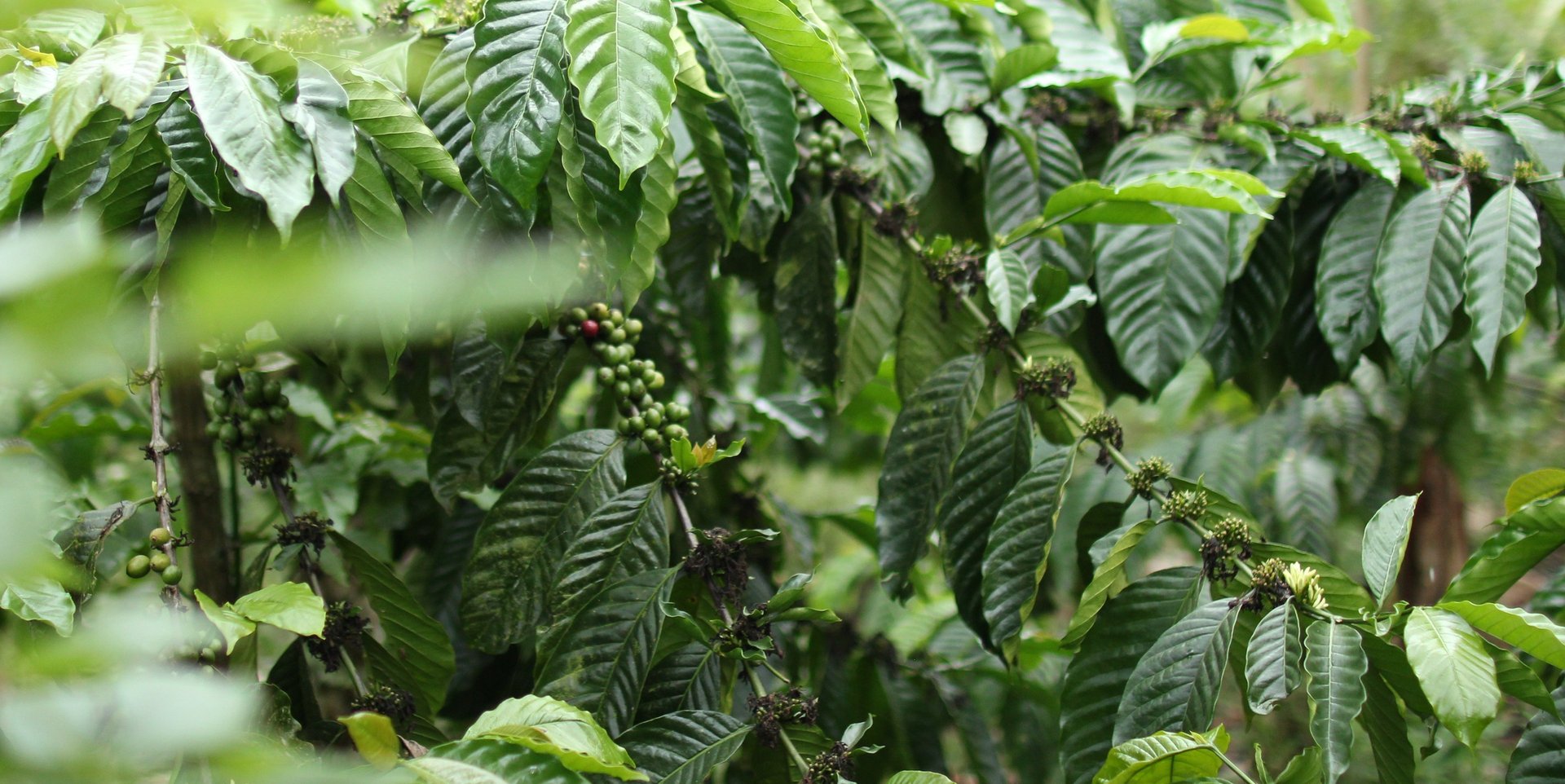
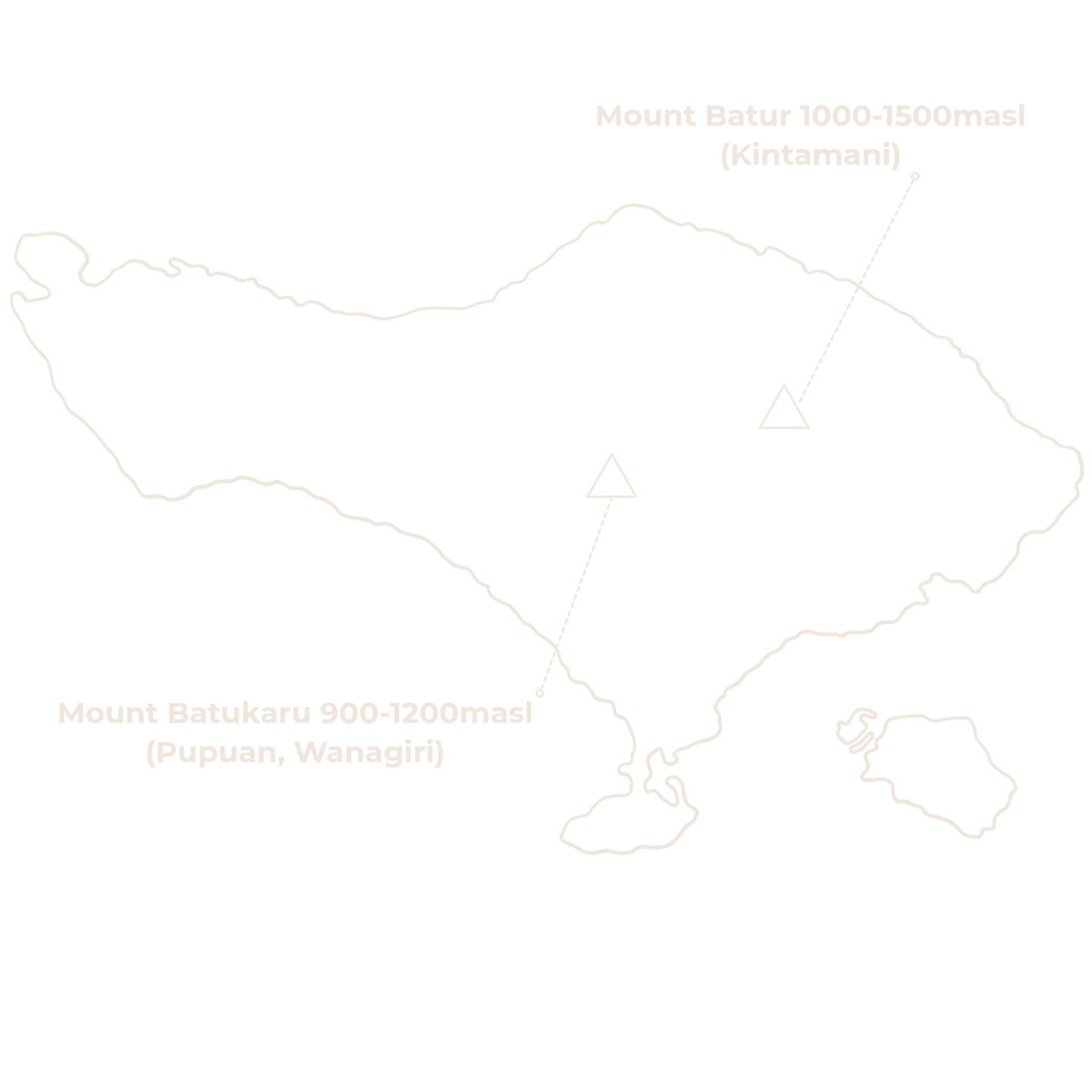
Our primary coffee partners are based in Bali. They grow their coffee around Mount Batukaru and Mount Batur. The coffee harvesting season ranges from February to July with peak harvest typically occurring in April.
All of our partners practice organic methods, and we promote agroforestry systems which are more resilient than conventional monocrop agriculture. We categorize our partners into the following growing regions.
Wanagiri
This coffee growing region is also located around Mount Batukaru but at higher altitudes compared to Pupuan. Most of the coffee grown here is Arabica with some Robusta. The coffee beans produced here are mostly fully washed or naturally processed.
Kintamani
Compared to our other partner regions, coffee from Kintamani is grown at higher altitudes and is mostly Arabica with some robusta. The main post-harvest methods used in this region are natural and full wash processes.
Pupuan
Located around Mount Batukaru, this region grows both Robusta and Arabica coffee and is among the largest producer of high-quality Robusta in Bali. Most of the harvested coffee cherries (both Robusta & Arabica) are handled using the natural process or full wash process. However, based on demand, a certain amount is set aside for more complex and time consuming methods such as the wine process and honey process.
Coffee Processing Methods
These processing methods are used by our partners on both Arabica and Robusta coffee beans.
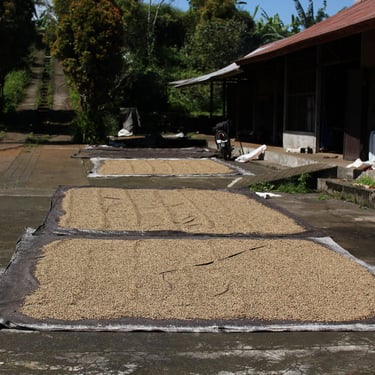
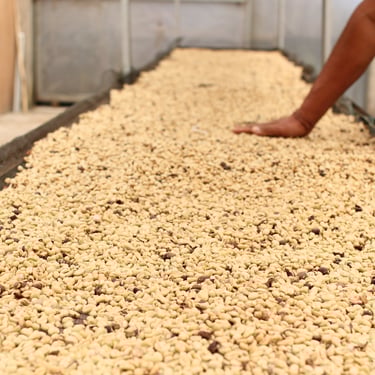
This is a wet process and is the other main method used by our partners. Coffee cherries are washed in large open tubs of water and are fermented for a relatively short period. The pulp and mucilage are completely removed before the coffee beans are dried under sunlight or in greenhouses. Once the beans are dry enough, they are ready for assessment and storage. Coffee processed using the full wash method tend to produce clearer and more consistent notes after roasting.
Honey Process
This process is not as commonly used by our partners but is becoming more widely adopted. The overall process is longer compared to the other main methods. Thus, only a certain amount of coffee is set aside for honey processing based on demand. Harvested coffee cherries are pulped but the bean retains a layer of mucilage. The bean and mucilage are fermented in a "drying" process. The mucilage layer eventually looks a bit like honey (hence the method name). After the beans finish with fermentation and drying, the layer of dry mucilage is removed. The roasted beans tend to have a balance of fruitiness and clarity that is somewhere between natural and full wash. Larger quantities can be produced if orders are placed before the next harvest season.
Natural Process
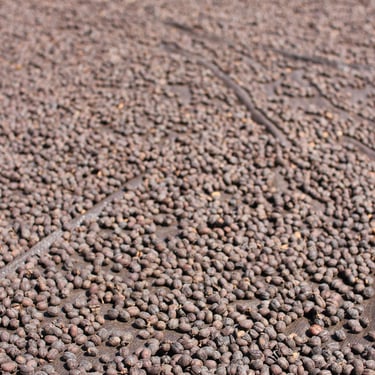
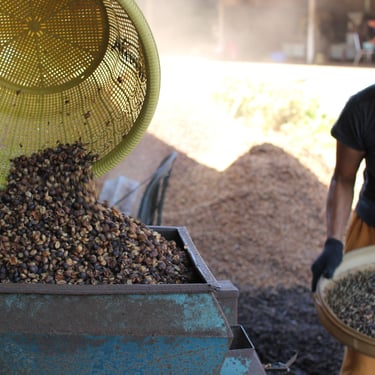
This is a dry process and is one of the main methods used by our partners. Whole harvested coffee cherries are dried under the sun or in greenhouses. They are periodically raked until they reach the right moisture content. They are then hulled and sorted for grading. The coffee beans ferment inside the cherry during the drying process and tend to retain fruitier notes once they are roasted.
Full Wash Process
Wine Process
Similarly, the wine process is not as widely used by our partners and is usually reserved for our specialty and premium coffees. The overall fermentation and drying process can take around a month or more. The coffee cherries are stored in sealed containers in an anaerobic environment then dried in several stages. The coffee beans tend to result in bold, fruity and complex notes after roasting. Larger quantities can be produced if orders are placed before the next harvest season.
Coffee Quality Standards
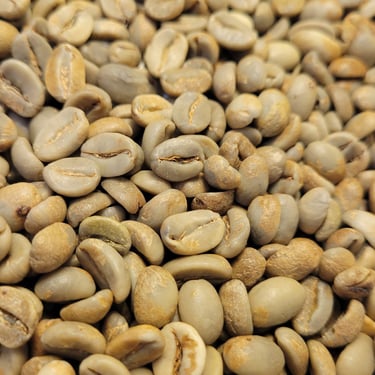
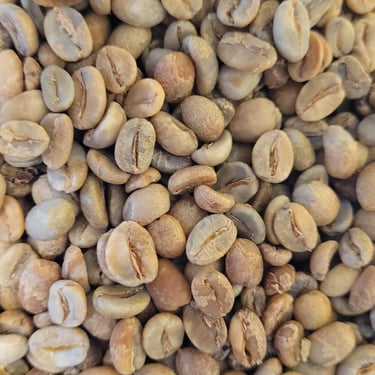
We work in collaboration with locals who have been trained to spot defects and manually sort green coffee beans to meet quality standards.
Indonesian Coffee Grades
Indonesian Arabica and Robusta coffee beans are graded according to the guidelines issued by the National Standardization Agency (BSN). The specifics are outlined in SNI 01-2907-2008.
Grading of green coffee is done based on the quality of 300-gram test samples and the scale goes from Grade 1 to Grade 6. There are general and specific quality criteria outlined in the standards. All coffee that has been graded must meet the general criteria which are:
It has a maximum water content of 12.5%
It does not contain any live insects
It does not contain any rotten or spoiled smelling beans
The maximum rate of foreign material contamination is 0.5% (twigs, rocks, etc.)
In addition to the general criteria, the specific criteria outline size and defect standards. Each type of defect has an assigned value. These values are added up based on the number of defects found in the sample. The more defects found in a sample, the higher the overall defect value count. Grade 1 coffee has a maximum defect value count of 11 or less per 300-gram sample while Grade 6 coffee has a defect value count of 151 to 225.
These grades are useful tools for communicating the quality and value of coffee beans which can provide guidance for your sourcing needs.